Win buyers from competitor brands
Customers often stick with what they know. Sampling gives competitor customers a low-risk reason to try an alternative — and Zamplit captures competitor usage, comparison feedback and switching intent so you can move high-intent customers to the next action.
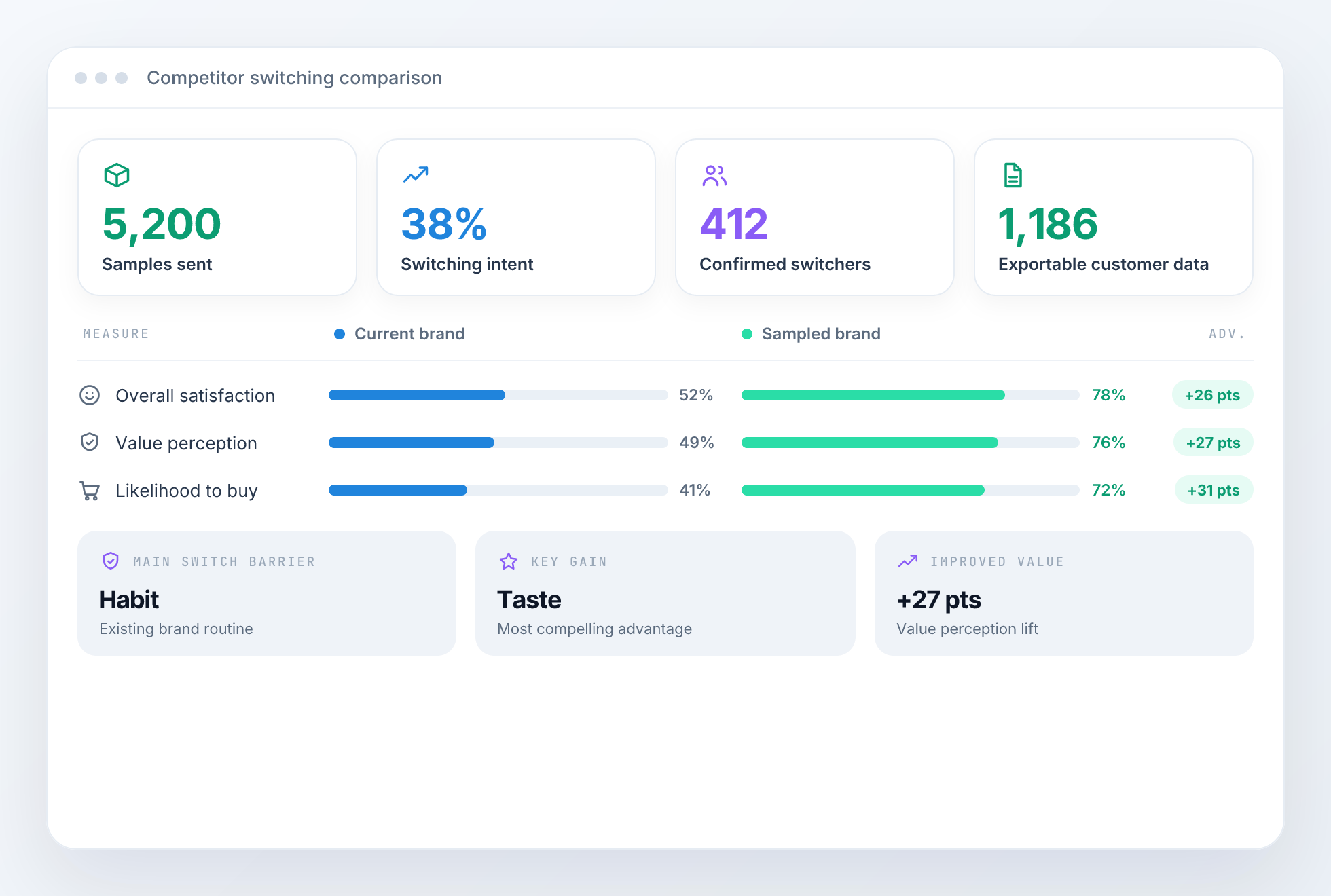
Why product trial changes the answer
When people actually use the product before they answer, the quality of the response changes — and so does what a brand can do next.
People often stay with existing brands because of habit, trust, routine, price, availability or perceived risk.
Sampling creates a reason to reconsider — a low-risk way to give customers a direct experience of an alternative product and reduce the risk of switching.
You give competitor customers a low-risk reason to try an alternative and move high-intent switchers to the next action.
What you gain from real product trial
- Trial creates a reason to switch
- Direct product comparison
- Lower perceived risk
- Competitor usage understood
- Offers reach high-intent users
How competitor switching campaigns can look with Zamplit
Example brief: A challenger household brand wants to understand whether trial can shift preference among competitor buyers.
This is one example journey. Zamplit campaigns can be shaped around different audiences, channels, questions and outcomes.
The questions this can answer
Every Zamplit campaign can be shaped around the questions a brand needs to answer. The examples below show the types of signals product trial can help uncover.
Outputs you can act on
Insight
What the brand learns from real product trial.
- Competitor used
- Current satisfaction
- Product comparison
- Switching intent
- Barriers to switching
Decision
How the findings shape the next move.
- Target the most open segments
- Sharpen the comparison message
- Pick the right offer
- Prioritise high-intent switchers
- Shape follow-up
Activation
How the outputs are used beyond the campaign.
- Switching-intent segments
- Paid media audiences
- CRM follow-up
- High-intent responders
- Exportable signals
Where brands put product trial to work
A few of the situations where brands use Zamplit — each one shaped around a different objective, audience and next action.
Identify customers currently buying a rival brand and invite them into a relevant trial journey.
Capture what users like or dislike about the brand they currently buy.
Ask customers to compare the challenger product after they have actually tried it.
Understand whether trial has changed likelihood to switch, buy or recommend.
Identify what still holds customers back, from habit and trust to price or availability.
Create follow-up segments based on competitor used, satisfaction and switching likelihood.
Keep exploring
How product sampling can increase product awareness more effectively
A lot of product awareness activity is built around visibility alone. That can be useful, but visibility is not the same as…
Read article →ArticleProduct sampling brand activation ideas for consumer brands
A lot of brand activations create attention without creating much real product experience. That is often where value gets lost. The campaign…
Read article →ArticleProduct launch campaign ideas that create awareness, trial, and follow-up value
A new product launch can be one of the most important moments in a brand’s marketing calendar. It is a chance to…
Read article →Give competitor customers a reason to try something new
Tell us what you want this campaign to achieve and we'll shape the right sampling journey around it.